The 69th Annual Autumn Scientific
Conference of the Korean Society of Cardiology
October 16th to 18th, 2025, Grand Walkerhill, Seoul
Yonsei Univ. Ji Won Seo
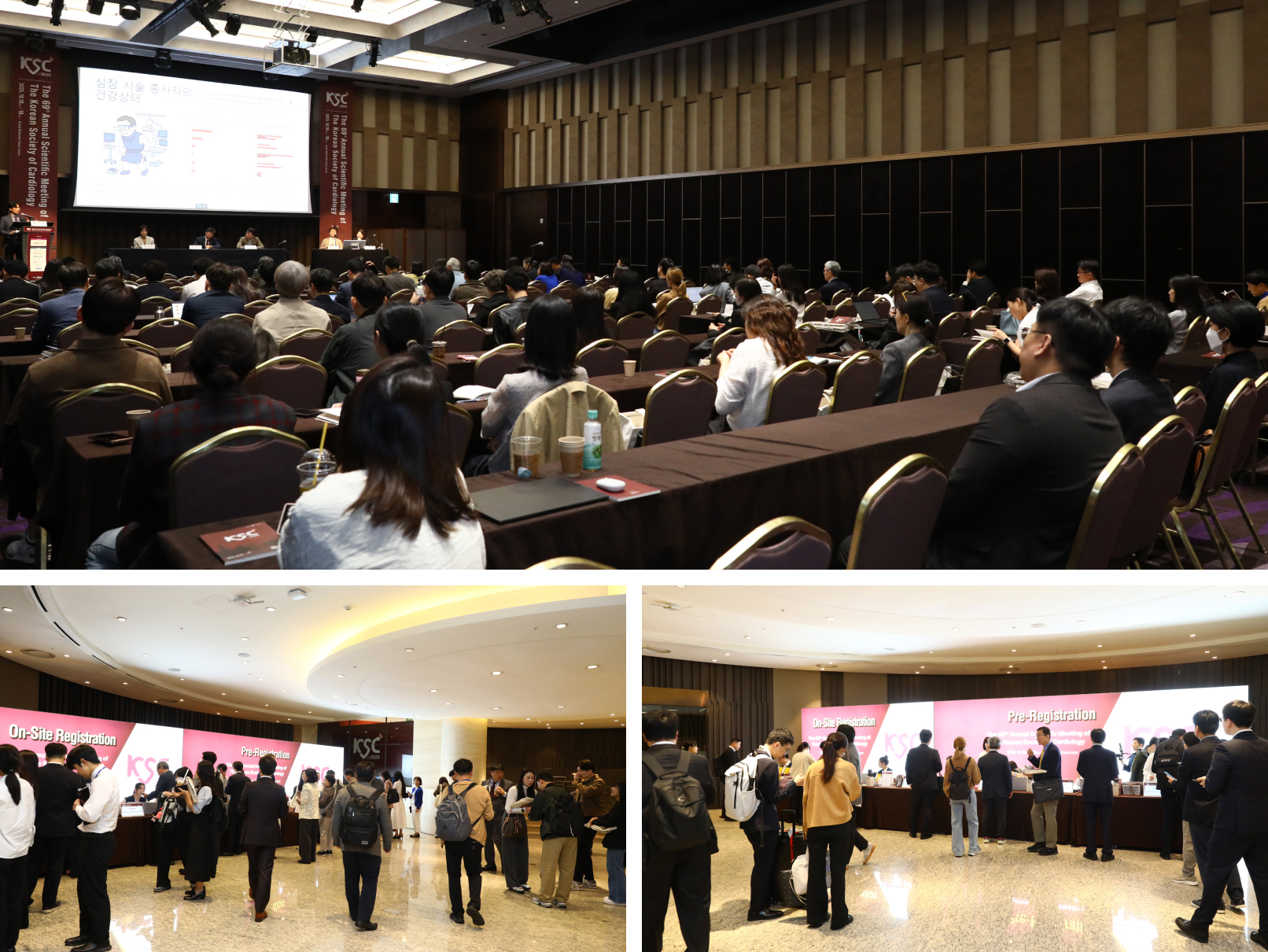
From October 16th to 18th in 2025, the 69th Annual Autumn Scientific Conference of the Korean Society of Cardiology was successfully held at the Grand Walkerhill Seoul.
This year's conference showed many changes and a more diverse program composition. Among them, presentations on Medical Therapy in Valvular Heart Disease and Multimodal Imaging in Cardiomyopathies in the echocardiography-related sessions garnered significant attention. Additionally, sessions on right ventricular imaging and imaging assessment of HFpEF attracted considerable interest from the audience by specifically addressing the practical application and clinical significance of the latest imaging techniques. A session on growth as a researcher and research methodology, although not directly related to echocardiography, was held, receiving particular interest from young researchers.
The residency training session systematically and clearly covered everything from basic tests for heart disease to the practical process of writing research papers, which was highly beneficial for the residents. The resident education session systematically and comprehensibly covered topics ranging from basic cardiac examinations to the practical process of manuscript writing, proving extremely helpful to residents. The lectures that connected complex concepts with clinical cases and shared insights on actual research design and data interpretation went beyond simple knowledge transfer to provide insights on "how to think and begin research.“
What I consistently feel while listening to lectures by distinguished domestic and international scholars is their profound insight and practical advice that can be immediately applied in clinical practice. At this conference as well, the messages about "the perspective on viewing patients" and "the attitude researchers should have," along with the latest research findings, were particularly impressive. These lectures served as a valuable stimulus, prompting me to reflect on what I might be missing in clinical practice and helping me concretely envision future research directions and collaboration possibilities.